
beyond the fan zone: episode 2
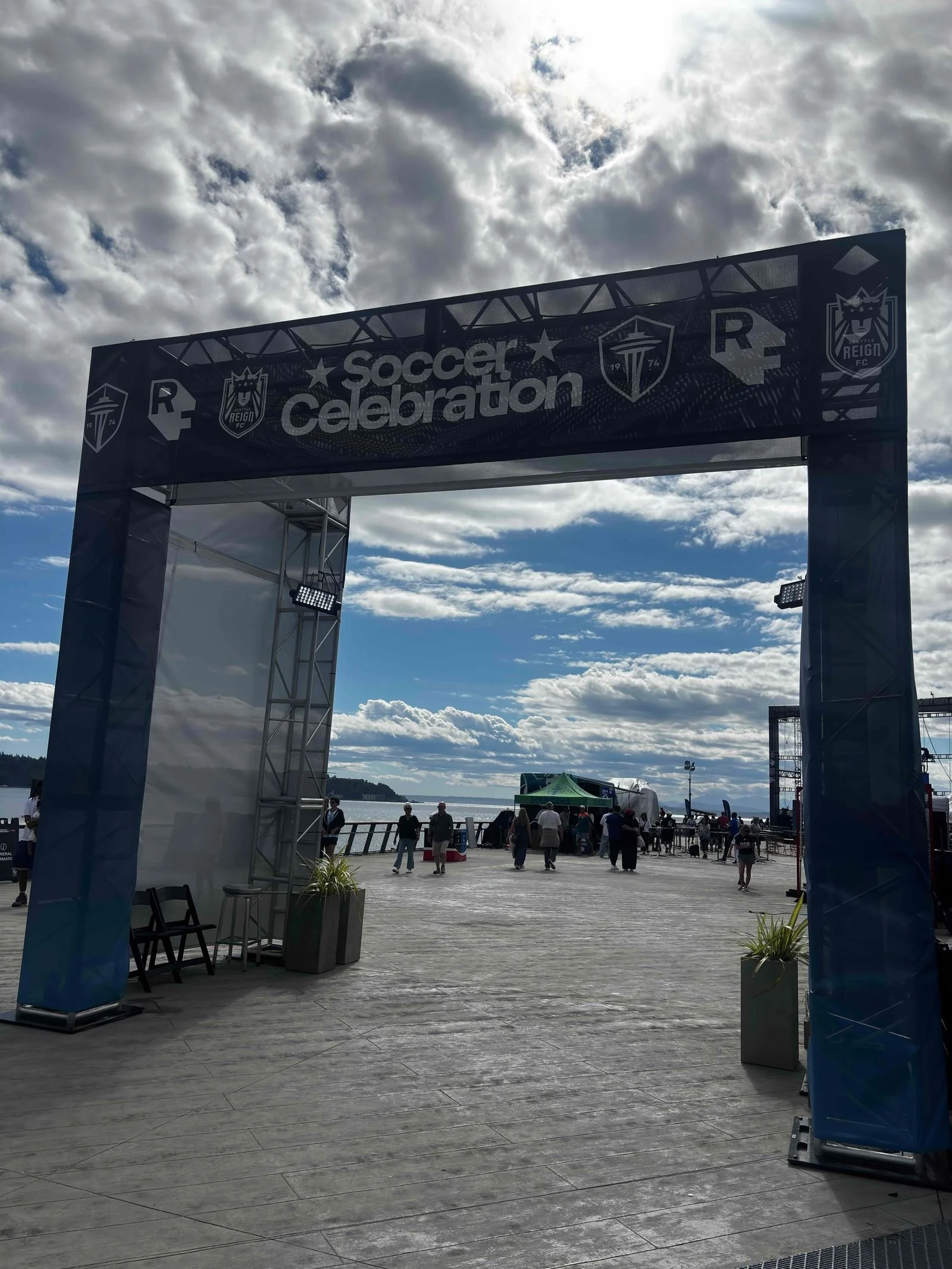
The entrance to the Seattle Soccer Celebration on Pier 62 along Seattle’s Waterfront.
What Seattle’s Waterfront Installations Taught Me About Designing Around Community
by Jackie Wade, Creative Strategist
Part 2 of a field-study series exploring Seattle’s citywide World Cup experience through the eyes of a native Seattleite and TPN creative strategist, and what it can teach brands about creating experiences that bring people together.
When a brand enters a major cultural moment, there is always a temptation to make itself the center of attention.
Bigger logo. Bigger structure. Louder programming. More reasons for someone to stop what they are doing and engage with the brand.
But on Seattle’s waterfront, the experiences that stayed with me did something different. They understood that the fans, the match, and the community were already the story.
The strategic question wasn’t, “How do we get everyone to pay attention to us?” It was, “How can we give people a better way to experience what they already came here for?”
Earlier in the tournament, I watched Argentina play Algeria from a floating barge at Pier 62. The barge was a ticketed experience with a giant screen, a small soccer pitch, a stage, food and drinks, and Elliott Bay in the background. During breaks in the broadcast, an emcee kept the energy high witt contests and audience participation.
There were operational choices I would have reconsidered. For a mult-hour viewing experience, there were only about 20 actual chairs, and the food selection left quite a bit to be desired. But the overall environment felt contained and communal without making us feel packed in like sardines.
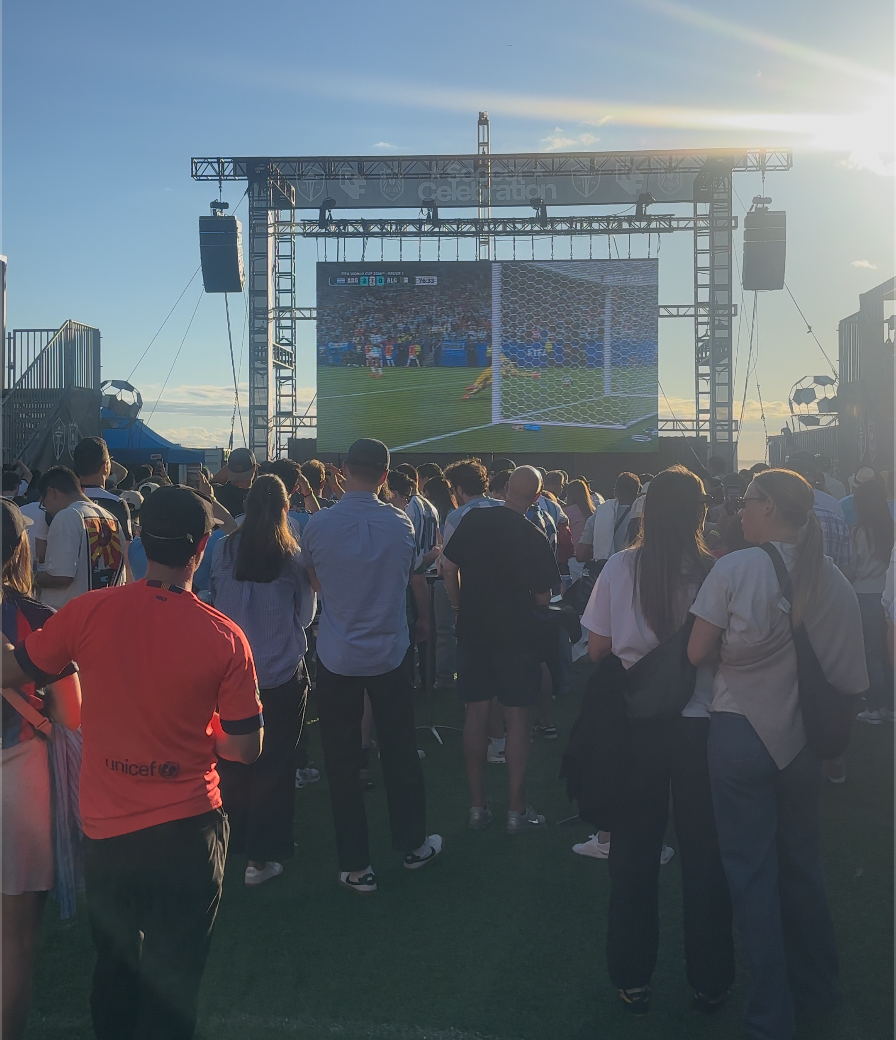
Fans watch the Algeria v Argentina game on the Seattle Sounders FC and Seattle Reign FC barge located just north of Pier 62 along the Seattle Waterfront.
What made the waterfront especially strong was everything happening around the match.
Seattle Sounders FC and Seattle Reign FC used the moment to introduce visitors to the clubs that play here yearround. Their activations used video, audio, and storytelling that gave traveling fans a window into Seattle’s permanent soccer culture. RAVE Foundation shared the work behind the mini pitches it has built across Washington to make soccer more accessible. The broader Seattle Soccer Celebration brought watch parties, youth programming, music, food and play to the water’s edge.
The RAVE story hit me personally.
Some of my earliest memories of soccer are from summer clinics where Sounders players taught me how to play. Warm summer days in West Seattle working on my passing, throw-ins, and penalty kicks. Decades later, RAVE is creating that same kind of entry point at a much larger scale.
That is more than a temporary activation. That is a legacy.
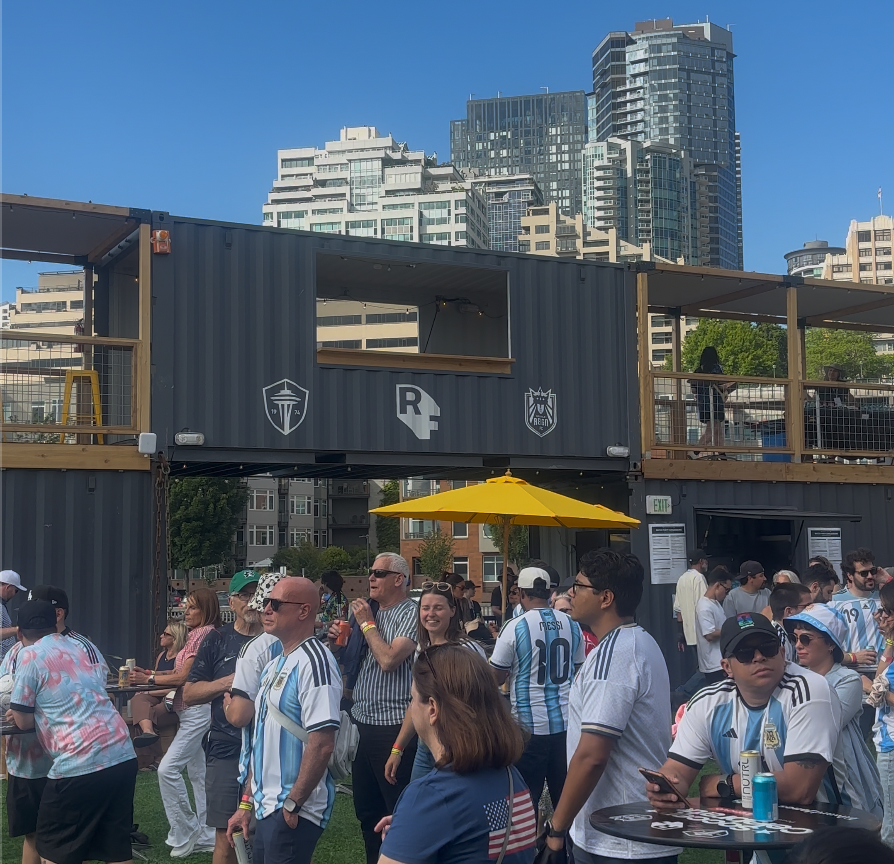
Fans gather at halftime on the barge to cheer on their teams.
It also highlights the difference between brand presence and brand value. Presence says, We were here. Value says, More people could participate because we were here.
For event and marketing leaders, that distinction should shape the strategy long before anyone begins designing a footprint. What is the audience already trying to feel or do? What friction can the brand remove? What access, comfort, information, entertainment or sense of belonging can it add?
The best activation may be the one that gives people a place to gather, helps them understand the local story or makes it easier for a kid to see themselves in the sport. It does not need to interrupt the experience to prove that it exists.
At TPN, this is where we start: not with a list of things a brand could build, but with the role it can meaningfully play. Creative strategy defines that role. Experience design makes it visible. Production and operations make sure it actually works for the people who show up.
The waterfront was my strongest example of brand participation supporting community instead of competing with it.
The lesson is simple.
Your activation does not need to become the main event. Its job is to help more people experience the main event together.
Next, I head south to Pioneer Square, where Seattle’s existing soccer rituals showed why local culture may be one of the most valuable creative assets an event can have.