
Backstage Pass: Behind the Scenes of
the World’s Largest Tech Stage
Let me set the scene.
It’s 6:00 AM. Rehearsals start in 30 minutes. Your coffee is strong, but not strong enough because you were standing on this same stage until 10:00 PM last night. The lights are half up, the room is quiet in that eerie pre-show way, and in a few hours, this space will be watched by the world.
You have ten days. Roughly a hundred hours on site. One stage.
On that stage, you’re producing up to six keynotes for six different Fortune 100 companies, each with their own CEO, story, launch moment, and zero tolerance for mistakes. Every one of them expects their keynote to feel singular. Iconic. Like the stage belongs to them.
And somehow, it does.
This is the reality of CES keynoting. It’s fast, unforgiving, and completely unlike any other show environment. And it’s exactly the kind of environment TPN has spent decades mastering.
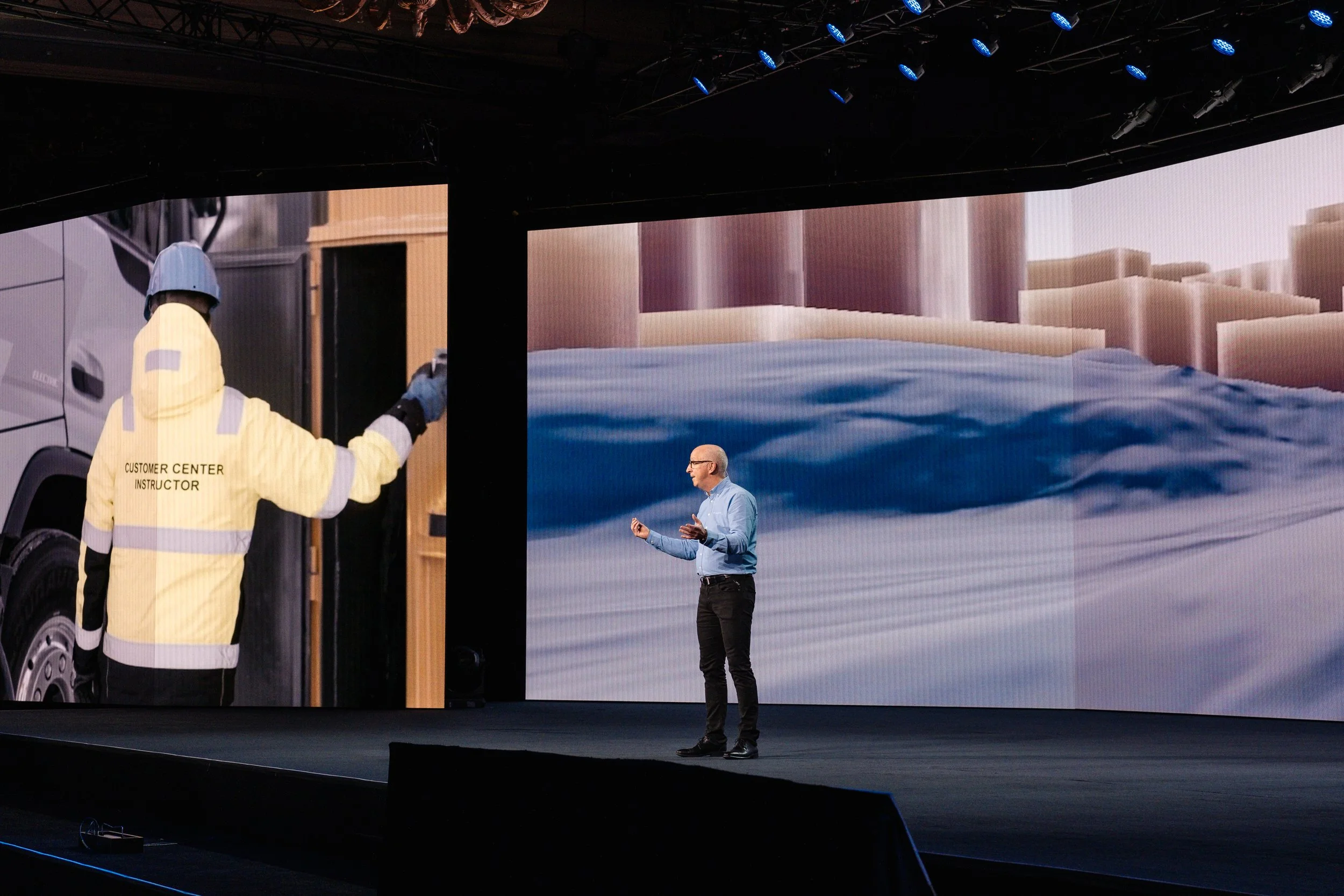
What makes it work isn’t luck or brute force. It’s a stage that has been pressure-tested at 6:00 AM rehearsals, midnight changeovers, last-minute script edits, and moments when the stakes couldn’t be higher.
This stage is the reason CES keynotes look effortless, even when nothing about them is.
CES keynoting is theater, broadcast, corporate storytelling, and live product launch layered on top of one another, executed at speed, under global scrutiny, with zero margin for error. And one detail changes everything: everyone shares the same physical stage.
The success of one keynote is never isolated. It’s tied to the one before it and the one after it. One late rehearsal, one misjudged scenic change, one technical delay doesn’t just affect a single presenter. It impacts the entire day.
So how does this work at all?
It works because the keynote stage was reimagined through the lens of repertory theater, scaled to the world’s largest technology showcase.
CES had already outgrown traditional production models. Concert touring workflows couldn’t scale or accommodate tight turnovers and massive scenic changes. Corporate show templates broke under the weight of too many stakeholders and not enough time or space.
What CES needed wasn’t a bigger show.
It needed a smarter foundation.

At its core, the keynote stage is a shared production architecture: staging, lighting, audio, video, labor, scheduling logic, safety protocols, broadcast readiness. Built once. Refined relentlessly. Trusted by everyone who steps onto the stage.
And here’s the part I wish more people understood: the shared stage isn’t restrictive. It’s liberating.
Client creativity takes center stage. Scenic elements change. Lighting shifts. Stories take risks. Tone, pacing, and personality vary wildly from one keynote to the next.
It’s that repertory theater model, scaled to the size of an industry, that makes each keynote feel singular. Same stage. New story. Every time.
To the audience, CES keynotes feel seamless. Backstage, they’re tightly choreographed, interdependent performances moving at full speed. Scripts evolve in real time. Product launches stay locked down until the last possible second. Confidentiality is non-negotiable.
And yes, things break. They always do.
When something breaks, the team has already started triage. Redundancies kick in. Backup plans surface without panic. Crews move before anyone needs to ask. The show goes on, often without the audience ever knowing there was a problem.
That’s usually when someone backstage quietly says, “Okay… that could’ve been bad,” and everyone keeps moving.
This is where experience matters most. When the lights go down and it’s time to go, even the most seasoned CEOs feel it. Nerves don’t disappear just because you’ve done this before. What steadies the room isn’t bravado. It’s trust. Trust that the system underneath them has done this hundreds of times already. Trust that the production team knows the show and the stage inside and out.
That’s why CES feels different.
Not louder. Not flashier. Just intentional.
“The audience never sees the complexity, and that’s the point. Stability is what gives creativity the space to take center stage.”
It’s the only stage in the world where multiple world-class productions can share a single footprint without competing for oxygen. Where complexity doesn’t collapse into chaos because there’s an architecture designed to carry it.
This stage has lasted because it evolves. Every year brings new technology, new audience behaviors, new accessibility standards, new broadcast demands. The system absorbs those changes so presenters don’t need to understand how it works to benefit from it.
And that’s the point.
After the final keynote, when the room empties and the lights come up one last time, there’s a moment of stillness again. The cables are still taped. The stage looks the same as it did ten days earlier. But in the days between, it held some of the year’s most iconic product launches, announcements, and tech collaborations.
Standing there, alone in that room, it’s clear why there is no other stage like the CES keynote stage.